

Kim wins $1.88M to make super-small drug carriers
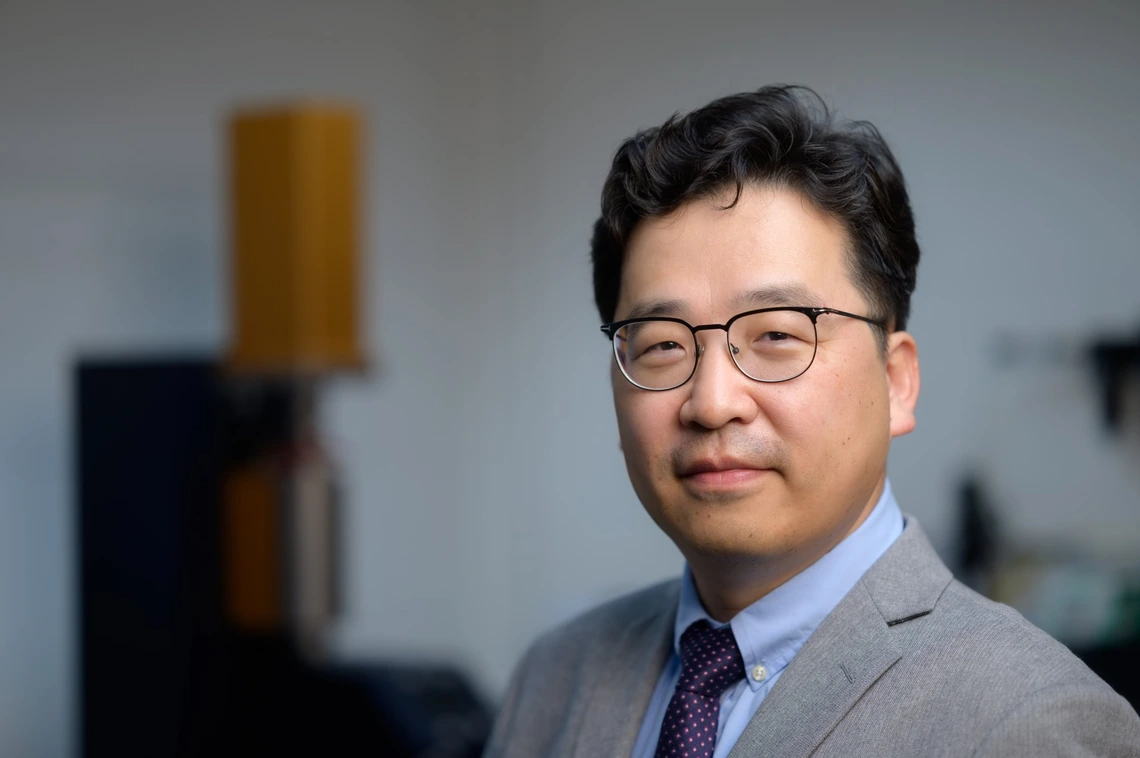
BME associate professor Minkyu Kim collaborates with BIO5 Institute researchers to improve drug delivery by mimicking red blood cells.
Associate professor of biomedical engineering Minkyu Kim has won a five-year, $1.88 million Maximizing Investigators’ Research Award from the National Institute of General Medical Sciences to develop a long-lasting drug carrier disguised as red blood cells.
Drug carriers shield medicines as they travel through the bloodstream, releasing medicine at targeted spots in the body while sparing healthy tissue along the way. But the body's defenses often intercept these carriers before they reach their destination.
"Our immune system and filtering organs such as the liver, spleen and kidneys are very effective at removing foreign materials from the bloodstream," Kim said. "Many drug carriers are cleared too quickly, and higher doses are often needed to compensate, which increases side effects and reduces the effectiveness of treatment."
His lab, the Kim Research Group, will create protein-based, cytoskeleton-like structures for drug carriers that avoid early immune defenses and deliver treatments to hard-to-reach areas, including those associated with heart and brain conditions.
“Kim's trail-blazing research will extend drug therapeutic levels and reduce dosage frequency, improving treatment effectiveness and avoiding possible organ damage,” said Mario Romero-Ortega, BME professor and department head. “Ultimately, this could increase quality of life during harsh treatments like chemotherapy.”